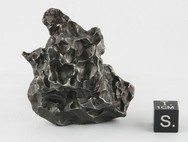
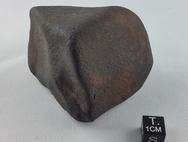
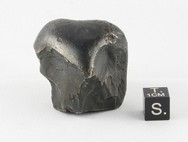
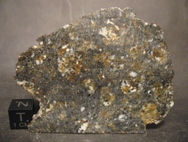
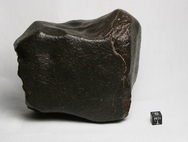
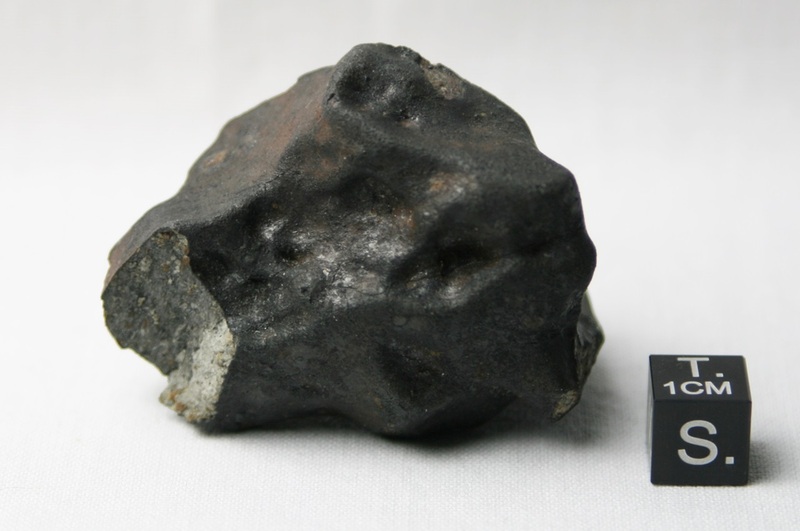
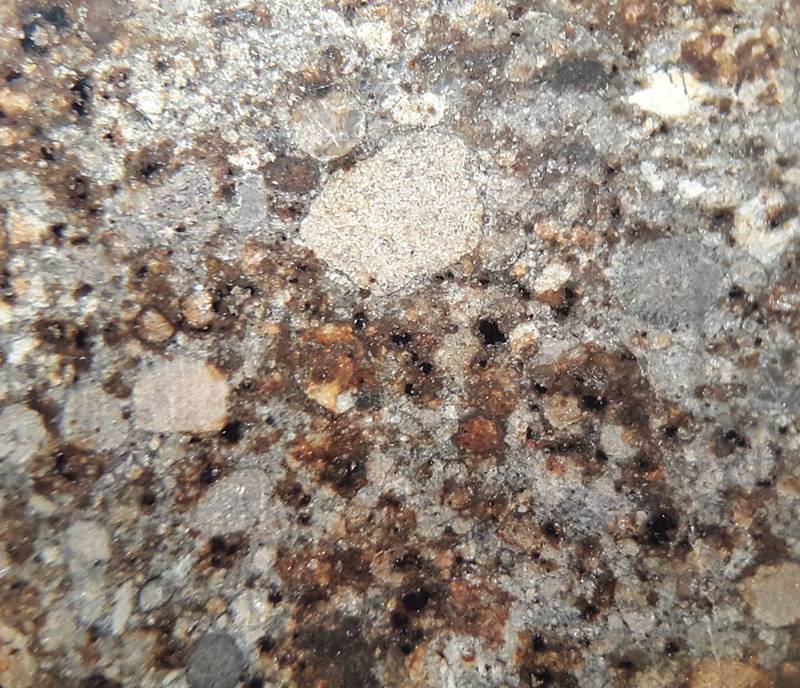
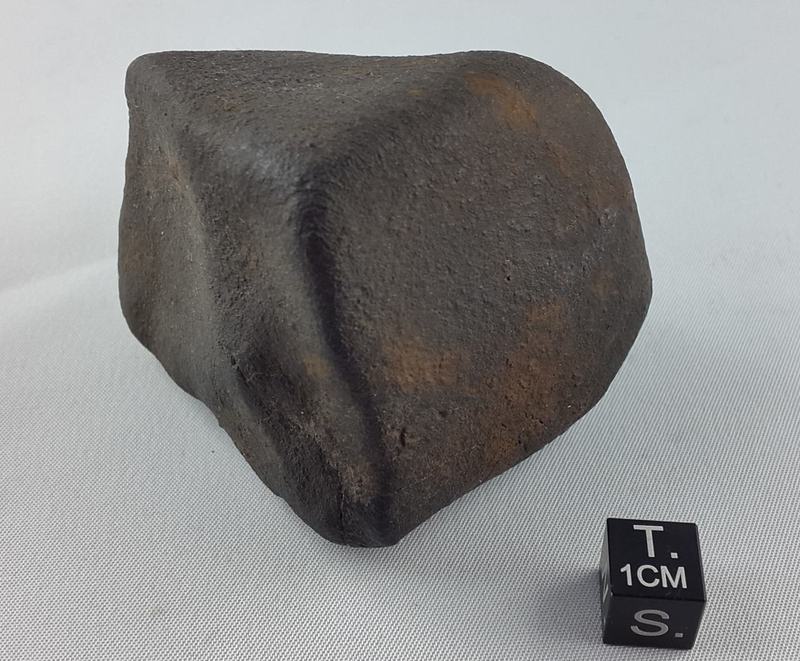
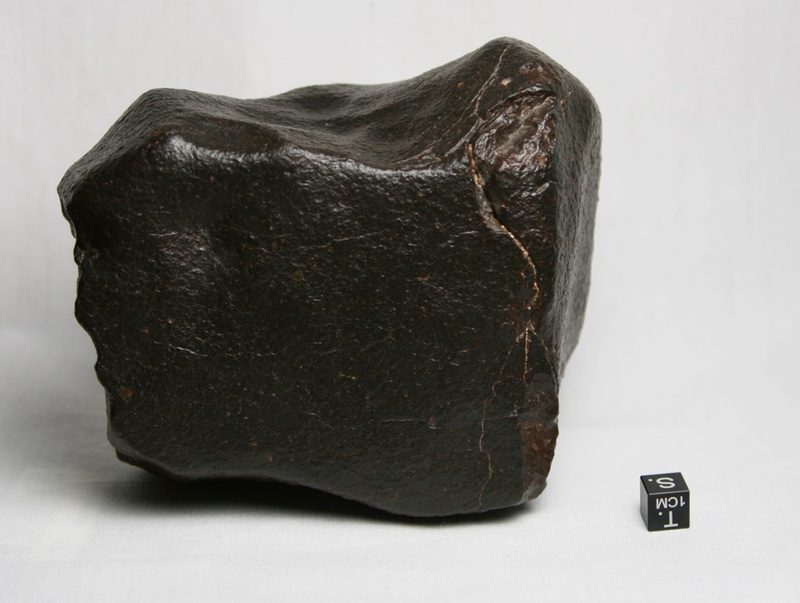
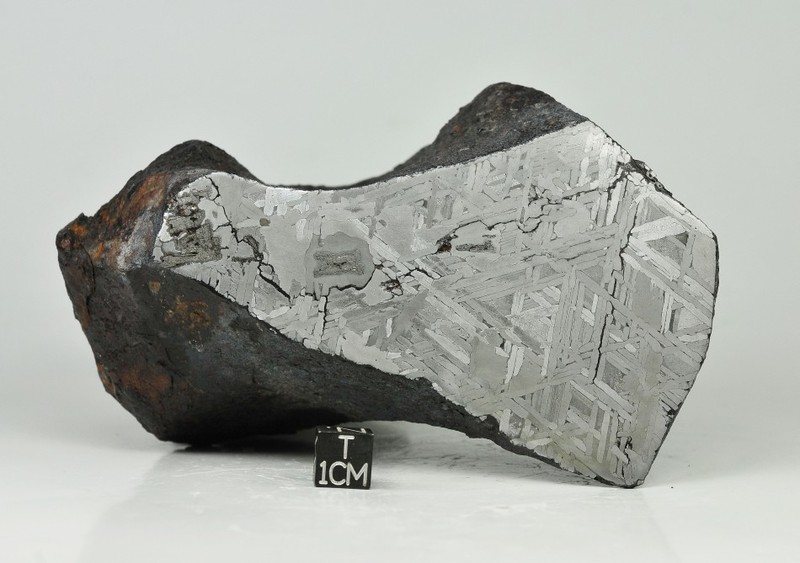
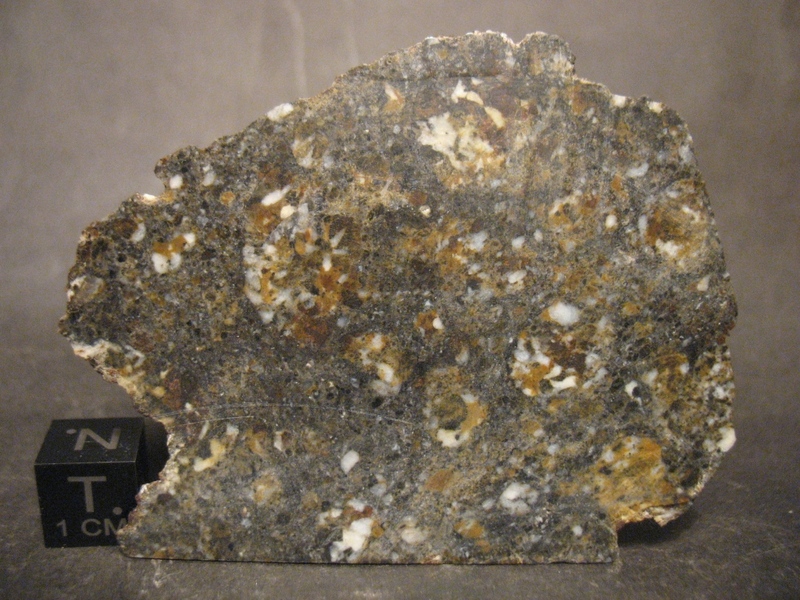
Twenty Stones. Not boulders or massive meteors like the one that brought about the Ice Age, but Twenty Stones between 1 and 14 kilograms that has become a historically significant and intensely researched subject among scientists such as the legendary Carl Sagan for over 150 years. These twenty stones that fell several miles apart in on the spring evening of May 14, 1864, near Orgueil, France are all collectively called the Orgueil Meteorite.
The Orgueil Meteorite and its fragments are classified as a CI chondrite carbonaceous chondrite meteorite, one of eight in the world. Scientists have studied the Orgueil Meteorite since its arrival in 1864, and quite frankly, they’re still baffled by it. For over 50 years, many scientists were interested in the possibility that the Orgueil Meteorite was proof of extraterrestrial life. In addition to a remarkable and rare form of gas called ‘Xenon-HL’ which is carried by “diamond dust” older than our solar system itself, organic matter present in the Orgueil Meteorite that was thought to be biological growth led some scientists to believe that Orgueil was proof of extraterrestrial life.
The presence of organic matter in the Orgueil Meteorite was also used to support the now-obsolete theory of spontaneous regeneration, which stated that biological life on Earth was formed from inanimate matter. This wasn’t disproved by Orgueil researchers such as Gabriel-Auguste Dubre, prominent 19th century French chemist or by François Stanislaus Clöez, the first to research the Orgueil Meteorite, but by Louis Pasteur, famous for creating a method to make milk perfectly safe for human consumption.
After Pasteur had famously disproved the theory of spontaneous regeneration on Earth, proponents suggested that The Orgueil Meteorite represented that possibility of spontaneous regeneration in space. Pasteur, who’d taken a sample of the Orgueil Meteorite shortly after its 1864 arrival, did not find any presence of indigenous or “intelligent” life inside or outside of Orgueil, mostly disproving proponents of spontaneous regeneration wrong again, but it wouldn’t stop them from debating the possibility of spontaneous regeneration in space.
The subject of spontaneous regeneration and the Orgueil Meteorite would again be raised in 1962, but by this time meteorite research technology had improved a great deal. In 1961, two Fordham University professors, Dr. Bartholomew Nagy and Dr. Douglas J. Hennessy, and Warren G. Meinschein, a petroleum chemist with the Esso Research and Engineering Company announced the presence of paraffinoid hydrocarbons in Orgueil, biological matter which exists in animal organisms on Earth. Nagy and another scientist by the name of George Claus further claimed that the Orgueil Meteorite contained “organized elements” that were similar to fossil algae. Nagy used all of these factors to conclude that if “alien” biological matter existed within the Orgueil fragments, alien biological life might exist elsewhere in the universe.
By 1963, however, the organized elements of present in the Orgueil fragments were proven to be mostly comprised of pollen or fungi; a natural result of environmental contamination and exposure. After over 100 years of debate and arguments over the extraterrestrial nature of the Orgueil Meteorite, even Dr. Nagy came to suggest that Orgueil was no indication of alien life.
Others were more eager to prove the “alien” theory—albeit illegally. In 1965, a seed capsule was found to have grown upon a sealed Orgueil sample that had been kept in Montuaban, France. Unfortunately, the seed capsule had actually been glued on and disguised with coal dust. The perpetrator of this hoax remains a mystery.
Still, scientists haven’t given up in the study of the Orgueil Meteorite. A 2001 study of Orgueil done by the NASA Ames Research Center, Scripps Institution of Oceanography and the Sweden’s famous Leiden Observatory revealed the presence of amino acids, which likely synthesized while Orgueil was in space. The study suggests that the Orgueil Meteorite was once a piece of a comet. In 2004, a new study attempting to explain the biological matter contained in Orgueil was conducted, and proved these growths were in fact cyanobacteria.
The theory still stands that these growths originated after the Orgueil Meteorite’s arrival, but for those believing in Orgueil’s indication of extraterrestrial life, there’s hope. Either way, research into these Twenty Stones has occurred for long before any of us were alive, and will most likely occur until long after we aren’t.